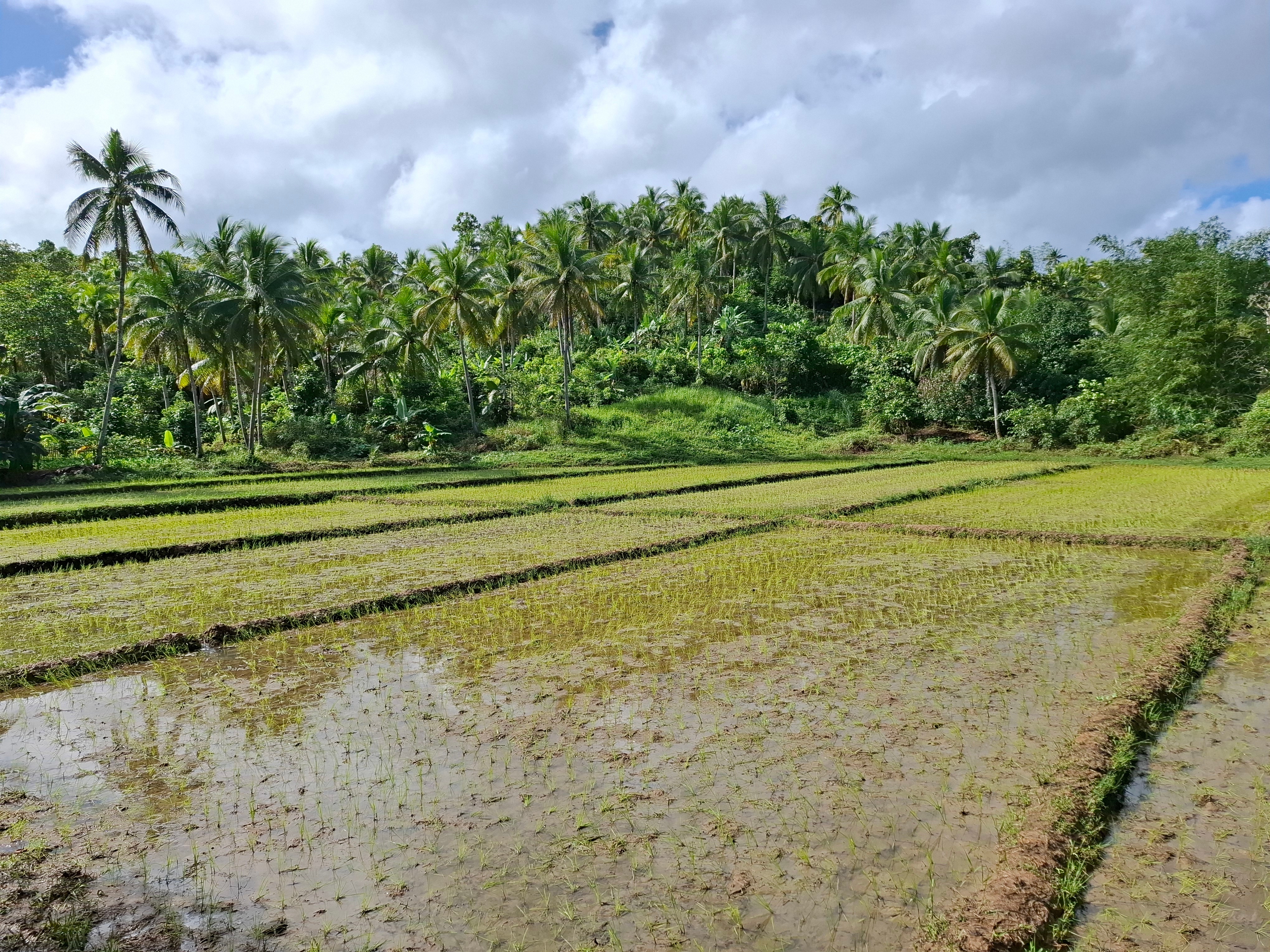
Night falls gently in Basey, bringing with it a surprising coolness that few expect from provincial living. The temperature drops to a comfortable 25°C, nature’s own climate control reminding us that comfort comes in unexpected forms. Adding to the tranquility is the view from the back of our home: a sprawling rice field, often dotted with farmers tending to their crops and the slow, steady movement of carabaos. It’s a scene far removed from the urban sprawl we left behind. But as I sit here in our modest home, my thoughts drift back to the life we left behind in Antipolo.
Life changed in the blink of an eye. One moment, we were settled in our routine, navigating the familiar streets of Antipolo, our phone buzzing with another Grab delivery notification. The next, we were watching movers pack up twenty years of memories into boxes, questioning every decision that led to this point.
I remember my last day in Antipolo, December 2024, standing within those empty walls. Each wall echoed with stories: high school days, college dreams, every heartbreak and triumph. The joy of meeting Arlene in 2017. Becoming a stepfather to little Argi. The precious arrival of Desmond Grey in 2018. Two decades of life, compressed into a moment of goodbye.
Sometimes the bravest decisions are the ones we make without perfect planning. Last July 2024, we took that leap, leaving our comfortable city life in Antipolo for the simpler rhythms of Basey, Samar. No continuous water supply. Spotty cellular service. Higher electricity rates than MERALCO ever charged us.
The changes felt different than we expected. Gone were the days of spontaneous Grab Food orders at midnight, the luxury of choosing between dozens of restaurants at our fingertips. Now, a trip to the nearest mall means a 28-kilometer journey to Tacloban. Every convenience we took for granted in Antipolo has become a lesson in patience and planning here in Basey.
My work as a freelance web developer found its own rhythm here, though not without significant challenges. International clients, mostly from the US, still expect timely delivery, but the soundtrack to my coding has shifted dramatically. Instead of the relentless roar of traffic, I now work to the sounds of roosters announcing the dawn, a chorus of birdsong filling the air, the deep croaks of frogs from the nearby fields, the occasional bark of a neighborhood dog, and the constant hum of unseen insects. The reliable Globe Fiber connection serves as my lifeline to the digital world, while the peaceful provincial mornings have surprisingly improved my focus. Yet the physical comfort of work proves more elusive.
I find myself missing my carefully crafted workspace in Antipolo – a sanctuary of productivity I had meticulously built over years. I missed the heavy hardwood office table that stood like an anchor to my work life. I missed the ergonomic chair that supported countless hours of coding. Every element had been optimized for long hours of focused work: the precise positioning of my monitor, the carefully calibrated air conditioning, the strategic placement of my keyboard and mouse, and the thoughtfully arranged lamp shade and lighting.
Now, I’m slowly rebuilding my workspace in Basey. The process feels like learning to write with your non-dominant hand – everything takes more effort, more conscious thought. The lack of my familiar ergonomic setup makes extended coding sessions more challenging. It’s a stark reminder of how much we take for granted until it’s gone, how much our productivity relies on the invisible comfort of familiar tools and spaces.
My six-year-old son, Desmond, navigates his own challenges with the resilience only children possess. “Papa,” he’ll say with a mix of frustration and humor, “I can’t understand what my teacher’s saying!” He makes us laugh with his observations about his classmates speaking Waray, while he responds in his confident English. At home, we speak English, and he understands Tagalog, but Waray remains a beautiful mystery we’re slowly unraveling together. This difference highlights the challenges, and the joys, of our new environment.
Some nights, when he’s feeling particularly honest, he’ll whisper his wish to return to Antipolo. These moments are heartbreaking, but they also strengthen our resolve to help our children find beauty in this new chapter. We’re learning that adaptation isn’t just about physical comfort – it’s about embracing a new cultural identity while honoring where we came from.
The transition from private to public education has been particularly challenging. Gone are the air-conditioned classrooms, specialized programs, and individualized attention our children once knew. I remember Desmond coming home one day, a puzzled look on his face, saying, “Papa, the teacher said ‘Maupay nga aga’ and everyone understood except me!” Yet there’s an authenticity in public school life that money can’t buy – though we sometimes catch ourselves missing the additional resources and structured environment of private education.
Arlene faces her own struggles in adapting to provincial life. She manages our children’s education with steadfast dedication, finding solace in creating beautiful crochet pieces during quiet moments. The slower pace of life here challenges her city sensibilities, but she faces each day with quiet determination. Her strength in this transition humbles me.
Here’s what they don’t tell you about major life transitions: They’re messy. Imperfect. Full of contradictions. We have high-speed Globe Fiber internet but have difficulty getting basic cellular service for OTP verification. Our children moved from private schools with dedicated service to public education. My son now studies at Basey I Central Elementary School – the same corridors I once walked as a child. The sounds of children learning and playing now fill the air around our home during school hours.
Each morning brings familiar faces to our gate – mothers with their children, older siblings watching over the younger ones. They help transport our water containers using the trolley cart I bought, making the 50-meter journey to and from the community deep well easier. The children earn five pesos per container – pocket money they use for school snacks or desired treats. It’s a small arrangement that brings smiles to their faces and helps us manage our daily water needs until we can build our own well.
The sense of community here is a stark contrast to our Antipolo life. Neighbors know each other intimately, sharing stories and support freely. In Antipolo, we barely knew who lived next door. Here, every face comes with a story, every greeting carries genuine warmth. The annual Fiesta celebrating our patron Saint Michael the Archangel brings the whole community together in a display of faith and fellowship that would be unimaginable in the city. The smell of roasting pig and the sounds of laughter fill the air during the celebrations.
The seasons here mark time differently than in the city. Summers bring intense heat at noon, while the rainy season transforms our world into something entirely new. Each weather change reminds us that nature, not convenience, influences the rhythm of life here.
Returning to one’s hometown carries its own weight of memories. Every street corner holds echoes of childhood. My mother, still teaching at the elementary school, watches her grandson walk the same paths I once did. Time folds back on itself in ways that make you question much of what you thought you knew about belonging.
The hardest part isn’t the physical adjustments – though those are significant. It’s reconciling the person I became in Antipolo with who I need to be in Basey. A freelance full-stack web developer’s life looks different here. The rhythm changes. The priorities shift. Each day brings new challenges as I adapt my work habits to this simpler but more demanding environment.
We’re slowly building our home here and planning for our own deep well this year. Each small improvement feels like planting roots in familiar yet foreign soil. Arlene adapts with quiet strength. Argi and Desmond discover the freedom of provincial life. We’re learning that comfort zones are meant to be left behind.
Here’s what I’ve learned about sudden change: It strips away pretense and forces us to be authentic. In Antipolo, we lived one way because we felt we had to. Here in Basey, we’re learning to live deliberately, choosing what truly matters.
The transitions aren’t over. We’re still adjusting. Still planning. Still dreaming. My workspace remains a work in progress, a daily reminder of the journey from comfort to growth. But there’s something powerful about standing in discomfort and choosing to grow through it, about watching our children adapt and thrive in ways we never imagined.
To those standing at similar crossroads: Your path won’t look like ours. Your challenges will be uniquely your own. But know this – sometimes the most profound growth comes from the decisions we make before we feel ready.
As I write this, watching another Basey sunset paint the sky, I realize something important. We didn’t just leave Antipolo behind; we carried its lessons with us. Every struggle there prepared us for this moment, and every comfort sacrificed opened space for new possibilities.
Tomorrow brings another day of adaptation and growth. We’ll encounter new differences between city and provincial life. Moments of doubt might still creep in. But we’ll face them together, our family growing stronger through each experience, knowing that life’s greatest adventures often start with one imperfect, courageous step into the unknown.
This is our new beginning. Messy. Unplanned. Beautiful in its own way.
And somehow, that makes all the difference.